Choosing the Right Ornamental Mandala Laser Cut Design for Precision Crafting
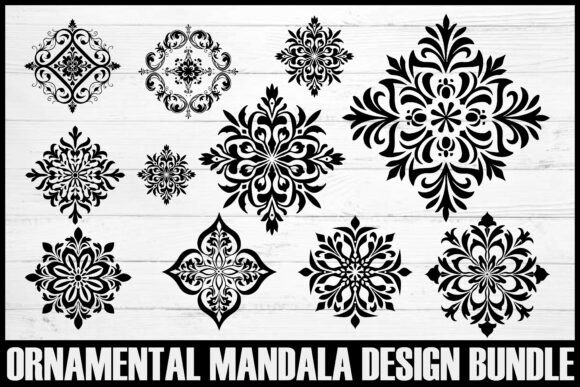
In the evolving landscape of digital fabrication and DIY home décor, the Ornamental Mandala Laser Cut Design has emerged as a staple for makers seeking intricate, symmetrical aesthetics. These designs are not merely decorative; they represent a specific intersection of artistic complexity and technical precision required for modern cutting machines. Whether you are operating a high-powered industrial CNC router or a desktop diode laser, the choice of design file significantly impacts the final output. Understanding the nuances of these files, their formats, and their applications is essential for anyone looking to elevate their craft projects from amateur attempts to professional-grade creations.
Defining the Ornamental Mandala Aesthetic in Digital Fabrication
An ornamental mandala differs from standard geometric patterns through its radial symmetry and dense detailing. In the context of laser cutting and vinyl plotting, this translates to a network of interconnected lines that must remain structurally sound after the negative space is removed. The primary challenge with an Ornamental Mandala Laser Cut Design is balancing visual intricacy with material integrity. If the lines are too thin, delicate materials like paper or thin acrylic may tear or warp. If the connections are too sparse, the design loses its cohesive "mandala" effect.
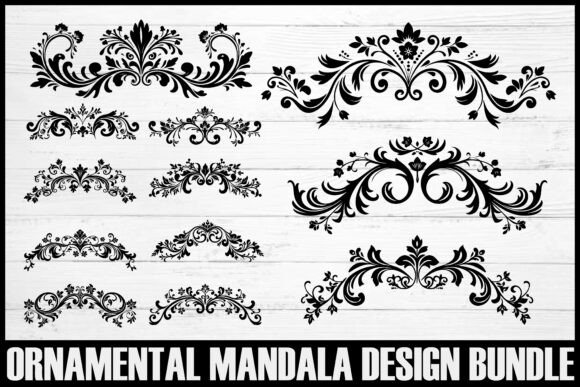
What makes these designs distinct is their versatility across mediums. Unlike a simple silhouette, a mandala requires the machine to perform thousands of small, precise movements. This demands high-quality vector data. When evaluating a design bundle, such as one containing 15 unique patterns, the focus should be on the cleanliness of the nodes and paths. Poorly optimized vectors can cause laser heads to stutter or vinyl blades to drag, resulting in jagged edges rather than smooth curves. Therefore, the value of a premium design bundle lies not just in the artwork, but in the technical optimization of the file for various machinery.
Evaluating File Formats: JPG, PNG, SVG, and EPS
One of the most critical decision factors when purchasing or selecting an Ornamental Mandala Laser Cut Design Bundle is the variety of file formats included. A comprehensive bundle typically offers JPG, PNG, SVG, and EPS files, each serving a distinct purpose in the workflow.
- JPG Files: These are raster images, meaning they are made of pixels. While high-resolution JPGs are excellent for reference prints or sublimation transfers, they are generally unsuitable for direct laser cutting or vinyl plotting without extensive tracing. Tracing a raster image often introduces errors, such as broken lines or extra nodes, which can compromise the cut quality.
- PNG Files: Similar to JPGs, PNGs are raster formats but offer transparency. This is particularly useful for layering designs in graphic software or for print-on-demand applications where the background needs to be invisible. However, like JPGs, they lack the scalable precision required for clean vector cuts.
- SVG Files: Scalable Vector Graphics are the gold standard for most hobbyist machines, including Cricut, Silhouette, and Glowforge. SVGs use mathematical paths to define shapes, allowing them to be scaled infinitely without losing quality. For an Ornamental Mandala Laser Cut Design, an SVG ensures that every curve remains smooth, regardless of whether you are cutting a 2-inch coaster or a 24-inch wall panel.
- EPS Files: Encapsulated PostScript files are professional-grade vector formats. They are ideal for users working with Adobe Illustrator, CorelDRAW, or industrial CNC software. EPS files often retain more metadata and layer information than SVGs, offering greater control over line weights and cut orders for complex projects.
When comparing bundles, prioritize those that provide native vector files (SVG and EPS). Relying solely on raster images (JPG/PNG) shifts the burden of vectorization onto the user, a time-consuming process that rarely yields perfect results for intricate mandalas.
Material Compatibility and Design Tradeoffs
The suitability of an Ornamental Mandala Laser Cut Design depends heavily on the chosen material. Each medium presents unique tradeoffs regarding detail retention and structural stability.
Wood and MDF
Wood is a forgiving material for mandala designs due to its natural grain and thickness. Laser-cut wood mandalas make excellent wall art and ornaments. However, thicker woods require wider kerf allowances (the width of the cut). If a design features extremely tight inner details, the laser may burn adjacent lines together, obscuring the pattern. For wood, it is advisable to select designs with slightly bolder lines or to use thinner plywood (3mm or 1/8 inch) to preserve detail.
Acrylic and Plastic
Acrylic offers a sleek, modern look but is prone to melting if the laser speed is too slow. Intricate mandalas in acrylic can look stunning when backlit, but the material is brittle. Thin connecting points in a complex design may snap during handling. When using an Ornamental Mandala Laser Cut Design for acrylic, consider designs with fewer isolated fragments and more continuous flow to maintain structural integrity.
Paper and Cardstock
For paper crafts, such as greeting cards or layered shadow boxes, the precision of the cut is paramount. Paper tears easily, so the design must have robust connections between elements. Vector files allow for precise control over cut pressure and speed, which is crucial for preventing tear-out in delicate paper mandalas. This is where the difference between a high-quality SVG and a traced JPG becomes evident; clean vectors ensure the blade follows the path exactly, minimizing stress on the paper fibers.
Vinyl and Stencils
Vinyl cutting imposes strict limitations on "islands" (pieces of vinyl that are not connected to the main sheet). An Ornamental Mandala Laser Cut Design intended for vinyl must be weeded carefully. Complex mandalas often result in excessive weeding time. For stencils, the design must be bridged appropriately to ensure the stencil holds together when lifted from the surface. Not all mandala designs are suitable for vinyl; look for versions specifically optimized for single-layer continuity if this is your primary use case.
Comparing Pre-Made Bundles vs. Custom Design
Crafters often debate whether to purchase a pre-made Ornamental Mandala Laser Cut Design Bundle or create their own. Creating custom mandalas requires significant skill in vector software and a deep understanding of geometric symmetry. It is time-intensive and often results in a steep learning curve.
Purchasing a bundle offers immediate access to professionally tested designs. A well-curated bundle, such as one containing 15 varied patterns, provides diversity in style and complexity. This allows makers to experiment with different aesthetics without the upfront investment of design software training. However, the limitation is lack of exclusivity; popular designs may be widely available. For commercial sellers, it is crucial to check licensing terms to ensure the designs can be used for physical products sold online or at markets.
Conversely, custom design offers total control over dimensions and detail density. If a project requires a specific diameter or a unique motif integration, custom creation is the only path. For most hobbyists and small business owners, however, the efficiency and quality of a premium bundle outweigh the benefits of starting from scratch.
Decision Factors for Selecting the Right Design
When evaluating an Ornamental Mandala Laser Cut Design, consider the following practical factors to ensure the best fit for your project:
- Machine Capability: Does your laser or cutter handle fine details? Diode lasers may struggle with extremely tight curves compared to CO2 lasers. Ensure the design's minimum line width matches your machine's precision.
- End Use: Is the item functional (like a coaster) or decorative (like wall art)? Functional items require sturdier designs with fewer fragile points.
- File Editability: Do you need to resize or modify the design? SVG and EPS files allow for easy editing in vector software, whereas JPGs do not.
- Time Investment: Complex mandalas take longer to cut and weed. Assess whether the visual impact justifies the production time, especially for bulk orders.
In conclusion, the Ornamental Mandala Laser Cut Design is a powerful resource for creators aiming to produce sophisticated, symmetrical art. By understanding the technical requirements of file formats, material limitations, and machine capabilities, makers can make informed decisions that enhance both the efficiency of their workflow and the quality of their final products. Whether for personal enjoyment or commercial enterprise, selecting the right design bundle is a foundational step in achieving professional results in digital crafting.