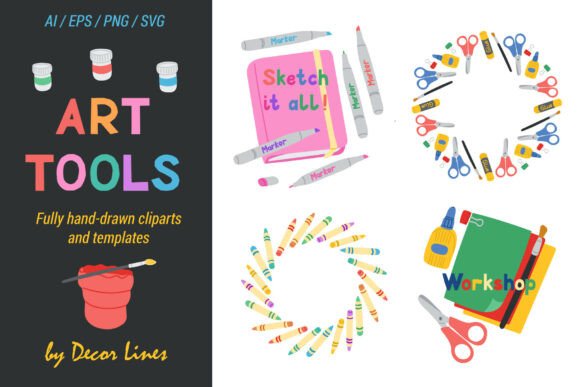
Art Tools Cliparts: A Comprehensive Guide to Enhancing Digital and Print Design
In the rapidly evolving landscape of digital design, the demand for authentic, hand-crafted aesthetics has never been higher. While sleek, minimalist interfaces dominate the tech world, there is a growing counter-movement that celebrates the tactile, imperfect, and colorful nature of traditional art supplies. This is where Art Tools Cliparts become an invaluable resource for creators across various industries. By integrating vector illustrations of markers, crayons, sketchbooks, and paints into modern projects, designers can bridge the gap between digital precision and human warmth.
This guide explores the multifaceted utility of art-themed graphic assets, examining how they function, why they are effective, and how professionals and hobbyists alike can leverage them to elevate their creative output. Whether you are an educator developing engaging classroom materials or a brand manager seeking a playful identity, understanding the potential of these visual elements is key to unlocking new levels of audience engagement.
The Power of Hand-Drawn Aesthetics in a Digital World
The primary appeal of Art Tools Vector Clipart Templates lies in their ability to evoke nostalgia and creativity. In an era where much of our interaction occurs through cold screens, imagery that mimics physical media creates an immediate emotional connection. A digitally rendered image of a watercolor brush or a scattered collection of crayons does more than decorate a page; it signals approachability, creativity, and fun.
These illustrations are not merely decorative; they serve as visual shorthand. When a viewer sees a palette and brushes, they instantly associate the content with creativity, learning, or DIY projects. This semantic association allows designers to communicate complex ideas quickly without relying heavily on text. For instance, a blog post about "getting started with painting" becomes instantly recognizable when accompanied by high-quality icons of easels and tubes of paint.
Psychological Impact on Audience Engagement
Research in visual communication suggests that hand-drawn elements reduce cognitive load and increase perceived trustworthiness. Unlike stock photography, which can sometimes feel staged or generic, illustrated cliparts offer a unique stylistic flair. They suggest that a human touch is behind the brand or project. This is particularly effective in sectors such as education, childcare, and artisanal crafts, where authenticity is paramount.
Versatility Across Industries and Use Cases
One of the most significant advantages of utilizing a comprehensive set of Art Tools Cliparts is their adaptability. Because the subject matter is universal—everyone recognizes a pair of scissors or a glue stick—these graphics transcend niche markets. Below are several key areas where these assets prove indispensable.
Educational Resources and E-Learning
Teachers and educational content creators are among the primary beneficiaries of art-themed graphics. In lesson plans, worksheets, and digital presentations, visual cues help maintain student attention. A math worksheet decorated with colorful crayons feels less intimidating and more inviting to young learners. Furthermore, for online courses focused on creative skills, using consistent iconography of brushes and sketchbooks helps structure the curriculum visually, guiding students through different modules.
Branding and Marketing Materials
For businesses in the creative sector, branding is everything. A graphic design studio, an art supply store, or a children’s party planning service can use these vectors to establish a cohesive visual identity. The playful nature of markers and paints works exceptionally well for:
- Social Media Graphics: Eye-catching posts that stand out in a crowded feed.
- Email Newsletters: Headers and dividers that add personality to corporate communications.
- Packaging Design: Labels for handmade soaps, candles, or craft kits that emphasize a DIY ethos.
Digital Scrapbooking and Personal Projects
The rise of digital planning and scrapbooking has created a robust market for customizable design elements. Hobbyists who use tablets and design software to create journals, planners, and memory books rely heavily on high-quality cliparts. The ability to layer images of washi tape, stickers, and drawing tools allows users to replicate the look of physical scrapbooking without the mess or cost of physical materials.
Technical Advantages of Vector Formats
When selecting design assets, the file format is just as critical as the aesthetic. The Art Tools Vector Clipart Templates Set typically includes files in AI, EPS, PNG, and SVG formats. Understanding the distinct benefits of each ensures that users can maximize the quality and flexibility of their designs.
Scalability and Resolution Independence
Vector formats like AI (Adobe Illustrator), EPS (Encapsulated PostScript), and SVG (Scalable Vector Graphics) are resolution-independent. This means they can be scaled from the size of a favicon to a billboard without any loss in quality. For designers working on large-format prints, such as posters or banners, this is non-negotiable. Pixel-based images often become blurry when enlarged, but vectors remain crisp and clean, ensuring that the fine details of a brush bristle or the texture of a crayon wrapper remain sharp.
Editability and Customization
Perhaps the most powerful feature of vector files is their editability. Using software like Adobe Illustrator or Inkscape, users can modify every aspect of the illustration. Colors can be changed to match specific brand guidelines, elements can be rearranged, and shapes can be altered. For example, if a designer needs a blue marker instead of red, they can adjust the hue with a single click. This level of control is impossible with flat PNG or JPEG images, making vectors the preferred choice for professional workflows.
Raster Compatibility for Web Use
While vectors are ideal for editing and printing, raster formats like PNG are essential for web use. PNGs support transparency, allowing designers to place cliparts over colored backgrounds or photographs seamlessly. Including both vector and raster options in a single package ensures that users have the right tool for every stage of the design process, from initial concept to final deployment.
Workflow Integration for Designers and Crafters
Integrating Art Tools Cliparts into a existing workflow can significantly speed up production time. Instead of drawing complex illustrations from scratch, designers can use pre-made templates as building blocks. This efficiency is crucial for agencies handling tight deadlines or solo entrepreneurs managing multiple roles.
- Selection: Choose the appropriate elements from the library, such as a sketchbook for a journaling app interface or scissors for a coupon design.
- Customization: Open the vector file in your preferred editor. Adjust colors to align with your project’s palette. Resize and rotate elements to create dynamic compositions.
- Assembly: Combine multiple elements to create scenes. For instance, group a palette, brushes, and paint tubes to form a header image for an art tutorial.
- Export: Save the final design in the required format. Use SVG for responsive web design or high-resolution PNG for social media uploads.
This streamlined process allows creators to focus more on strategy and messaging rather than getting bogged down in repetitive illustration tasks. Additionally, having a library of consistent assets ensures brand consistency across all platforms.
Considerations for Effective Implementation
While these graphics are versatile, effective use requires thoughtful application. Overusing cliparts can lead to visual clutter, distracting from the core message. It is essential to maintain balance and whitespace. Furthermore, designers should consider the context. While playful art supplies are perfect for a children’s birthday invitation, they may need to be stylized more subtly for a professional design portfolio.
Another consideration is accessibility. When using decorative elements, ensure they do not interfere with text readability. High contrast between the background and the text is vital, and cliparts should serve as complementary accents rather than obstacles to information consumption.
Conclusion
The integration of Art Tools Vector Clipart Templates into creative projects offers a unique blend of aesthetic charm and technical flexibility. By leveraging hand-drawn illustrations of everyday art supplies, creators can infuse their work with personality, warmth, and professionalism. Whether for educational materials, branding, or personal hobbies, these assets provide a foundational toolkit for visual storytelling. As the digital landscape continues to value authenticity, the ability to seamlessly combine traditional artistic motifs with modern design technology will remain a valuable skill for any creator. Embracing these resources not only enhances visual appeal but also streamlines the creative process, allowing for more efficient and impactful design outcomes.