Evaluating the Dreaming Tree Floral Illustration in Pastel Design
In the crowded landscape of digital assets, finding visual elements that balance aesthetic appeal with functional versatility is a common challenge for creative professionals. The Dreaming Tree Floral Illustration in Pas—a whimsical composition featuring a tree constructed from stylized flowers and leaves in soft pastel shades—represents a specific niche of design resources that prioritize emotional resonance and decorative density. This article examines the practical utility, design integrity, and application potential of this illustration style for marketers, content creators, and small business owners.
Deconstructing the Visual Composition
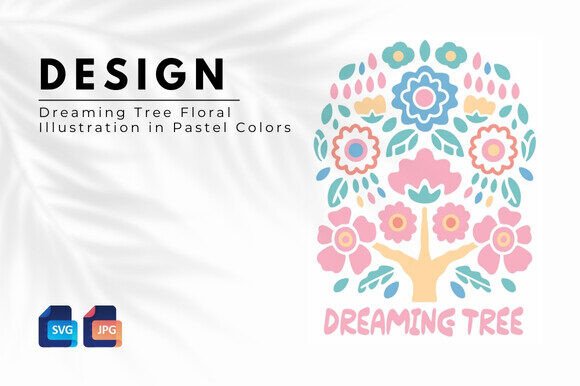
At its core, this illustration is defined by its structural metaphor: a light tan trunk supporting a crown not of traditional foliage, but of pink, blue, and peach-colored blossoms. The design choice to replace standard leaves with small teardrop-shaped elements creates a dense, decorative effect that fills negative space effectively. This approach serves a dual purpose. Aesthetically, it offers a high level of visual interest without the chaos of photorealism. Functionally, the uniformity of the shapes allows for easier scaling and integration into various layout formats.
The color palette is deliberately restrained. By limiting the spectrum to pastels, the image avoids the visual aggression often associated with saturated primary colors. The light tan trunk provides a neutral anchor, ensuring the softer hues of the blossoms do not appear washed out. For designers working on projects requiring a gentle, inviting tone, this chromatic strategy is highly effective. The inclusion of the text "DREAMING TREE" in a playful, rounded font at the base further cements the asset’s identity as a branded or thematic centerpiece rather than a generic background element.
Practical Applications for Content Creators
The primary value of the Dreaming Tree Floral Illustration in Pas lies in its adaptability across multiple media channels. For bloggers and publishers, particularly those in lifestyle, wellness, or parenting niches, this type of imagery serves as an excellent header graphic. The horizontal spread of the tree’s crown can frame titles effectively, while the pastel tones complement typical web typography without causing readability issues.
- Social Media Branding: The cheerful and inviting nature of the design makes it suitable for Instagram posts or Pinterest pins where visual warmth drives engagement. The dense floral arrangement ensures the image remains impactful even when viewed on smaller mobile screens.
- Packaging and Product Design: Small business owners selling handmade goods, such as candles, soaps, or stationery, can leverage this illustration for label designs. The whimsical font and organic shapes align well with artisanal brand identities that seek to convey care and creativity.
- Educational Materials: Educators and creators of children’s content may find the playful elements appealing. The simplified forms are easy for younger audiences to process, while the sophisticated pastel palette keeps the design from appearing overly juvenile, allowing it to bridge age gaps.
Assessing Quality and Usability
When evaluating any digital illustration, consistency and reliability are paramount. The Dreaming Tree Floral Illustration in Pas demonstrates a high degree of internal consistency. The stylization of the flowers and leaves follows a uniform logic, meaning that if a designer needs to extend the pattern or create complementary assets, the visual language is already established. This reduces the time required for custom adjustments.
However, usability depends heavily on the file format provided. For optimal flexibility, vector-based formats (such as SVG or AI) are preferred. These allow for infinite scaling without loss of quality, which is crucial when adapting the image for both large-format prints and small digital icons. If the asset is only available in raster formats (like PNG or JPEG), users must ensure they have access to high-resolution versions to avoid pixelation, particularly given the intricate details of the teardrop-shaped fillers.
Another consideration is editability. The separation of the trunk, blossoms, and text elements in layered files enables designers to customize colors to match specific brand guidelines. While the default pastel scheme is attractive, the ability to shift the peach tones to coral or the blues to teal can significantly expand the asset’s relevance across different seasonal campaigns.
Target Audience and Strategic Fit
Who benefits most from incorporating this illustration into their workflow? The ideal user is likely a professional who values speed and aesthetic coherence over bespoke, from-scratch design. Freelancers managing multiple clients often need reliable stock assets that do not look like generic clipart. The whimsical yet polished nature of this tree illustration strikes that balance.
Marketers focusing on emotional branding will also find value here. The "dreaming" concept, reinforced by the soft colors and organic shapes, evokes feelings of calm, growth, and imagination. This is particularly effective for brands in the mental health, creative coaching, or sustainable living sectors. In these contexts, the visual asset does more than decorate; it reinforces the brand’s core message of nurturing and potential.
Conversely, this style may not suit industries requiring stark minimalism or high-contrast corporate aesthetics. Financial institutions or tech startups aiming for a futuristic, sleek image might find the playful font and dense floral patterns too informal. Understanding these boundaries is essential for maintaining brand integrity.
Limitations and Considerations
While the Dreaming Tree Floral Illustration in Pas offers significant advantages, it is not without limitations. The density of the design, created by the small teardrop elements filling the spaces between flowers, can become visually noisy if placed against complex backgrounds. To maintain clarity, it is best used against solid, light-colored backgrounds or within ample white space. Cluttered layouts may diminish the impact of the intricate details.
Additionally, the specificity of the text "DREAMING TREE" embedded in the design can be a constraint. If a user requires a generic tree illustration without text, they must either crop the image—which may disrupt the composition’s balance—or possess the skills to edit the source file to remove or replace the lettering. For those lacking advanced graphic design software, this limits the asset’s plug-and-play convenience.
Long-Term Value in a Digital Portfolio
Investing in high-quality illustrations like this one contributes to a cohesive visual library. Unlike trend-heavy graphics that may feel dated within months, the pastel floral aesthetic has shown remarkable longevity in design trends. Its association with spring, renewal, and softness ensures it remains relevant across annual cycles. For serious hobbyists and professionals alike, having such versatile assets on hand reduces the friction of content creation, allowing for faster turnaround times on projects without sacrificing visual quality.
In conclusion, the Dreaming Tree Floral Illustration in Pas is a robust resource for those seeking to inject warmth and whimsy into their visual communications. Its strength lies in the thoughtful integration of color, form, and typography, creating a piece that is both decorative and meaningful. By understanding its optimal use cases and technical requirements, creators can leverage this illustration to enhance their brand presence and engage their audience effectively.