Integrating the Dining Silhouette Vector Art Bundle into Professional Design Workflows
In the fast-paced world of interior design, architectural visualization, and digital publishing, the need for high-quality, versatile assets is constant. Whether you are drafting a mood board for a luxury residential project or creating marketing materials for a furniture retailer, the visual elements you choose define the narrative. The Dining Silhouette Vector Art Bundle serves as a critical resource in this ecosystem, offering a curated collection of dining room silhouettes that capture the essence of elegance, classic style, and ornate detail. This article explores how to effectively integrate this asset pack into your creative processes, ensuring efficiency and aesthetic consistency across various projects.
Understanding the Asset Composition and Versatility
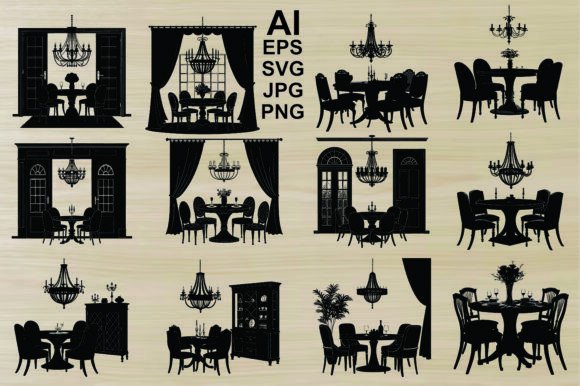
Before diving into implementation, it is essential to understand what constitutes this bundle. It is not merely a set of images; it is a comprehensive toolkit designed for multi-platform compatibility. The collection features intricate silhouettes of dining environments, including chandeliers, tables, chairs, cabinets, buffets, and architectural elements like arch windows and grid windows. These elements are rendered in styles ranging from Victorian and Baroque to Gothic and vintage, allowing for a wide spectrum of decorative interior themes.
The true value of the Dining Silhouette Vector Art Bundle lies in its file structure. The package includes five distinct formats: JPG, PNG, AI, EPS, and SVG, all compressed into a single ZIP file. This diversity ensures that regardless of your software preference—be it Adobe Illustrator, CorelDRAW, Inkscape, or web-based design tools—you have a compatible file type ready for immediate use. For professionals managing tight deadlines, this eliminates the time-consuming process of converting files or searching for alternative assets when a specific format is required.
Pre-Production: Planning and Mood Boarding
The integration of these silhouettes begins long before the final design is rendered. During the conceptual phase, designers and marketers often struggle to communicate abstract ideas such as "formal dining," "luxury interior," or "classic furniture" to clients or stakeholders. Text descriptions can be ambiguous, but visual aids provide clarity.
Using the PNG or JPG files from the bundle, you can rapidly assemble mood boards that establish the tone of a project. For instance, if a client requests a "vintage dining room with crystal chandeliers," you can layer silhouettes of ornate chandeliers and antique furniture against neutral backgrounds. This helps in defining the spatial arrangement and the interplay between light and shadow without getting bogged down in color palettes or texture details too early. By using these dining room silhouettes, you create a visual shorthand that aligns team expectations and streamlines the approval process.
Execution: Technical Implementation and Workflow Efficiency
Once the concept is approved, the workflow shifts to execution. This is where the vector formats (AI, EPS, SVG) become indispensable. Unlike raster images, vectors are resolution-independent, meaning they can be scaled infinitely without losing quality. This is crucial for large-format prints, such as wall murals for hospitality venues, or detailed architectural renderings.
Extracting and Organizing Files
To begin, download the ZIP file containing the bundle. Since the files are compressed to save storage space and bandwidth, you will need to extract them. Users on Windows can right-click the file and select "Extract All," or use third-party software like WinZip or WinRAR. Mac users can simply double-click the archive to decompress it automatically. Once extracted, organize the folders by file type or by element category (e.g., lighting, furniture, architecture) to maintain a clean workspace. Proper organization at this stage prevents clutter and reduces search time during intense design sessions.
Customization and Layering
In Adobe Illustrator or similar vector editing software, open the AI or EPS files. Because these are silhouettes, they are typically single-color paths, making them easy to manipulate. You can change the fill color to match your brand guidelines or design theme. For example, a black silhouette might work for a stark, modern contrast, while a deep navy or gold could evoke a sense of luxury and warmth.
Layering is another powerful technique. Combine the silhouette of a candelabra with an arch window and drapes to create a complex interior scene. Since the elements are separate, you can adjust their positions to create depth and perspective. This modularity allows for endless combinations, enabling you to create unique compositions that do not look like stock templates. Whether you are designing a menu cover for a fine dining restaurant or a brochure for an estate sale, these customizable elements provide the flexibility needed for professional results.
Post-Production and Multi-Channel Deployment
After the design is finalized, the bundle’s versatility supports deployment across various channels. For web developers and digital marketers, the SVG format is ideal. SVGs are lightweight, scalable, and code-friendly, ensuring fast loading times and crisp display on retina screens. You can embed these dining silhouettes directly into HTML/CSS for website headers, icons, or background patterns, enhancing the user experience with elegant, thematic visuals.
For print media, such as invitations, business cards, or packaging, the high-resolution JPG and PNG files offer a quick solution when vector editing is not feasible. These raster formats retain sharp edges and clean lines, ensuring that the intricate details of ornate furniture and crystal glass elements remain visible even at smaller sizes. This consistency across digital and physical mediums strengthens brand identity and professional credibility.
Quality Control and Best Practices
Maintaining quality control is vital when integrating external assets. Always verify that the silhouettes align with the overall design language. While the bundle offers gothic, baroque, and victorian styles, mixing incompatible eras can result in a disjointed aesthetic. Ensure that the level of detail in the silhouette matches the complexity of the rest of your design. A highly ornate chandelier silhouette might overwhelm a minimalist layout, whereas it would complement a rich, textured background.
Additionally, consider the context of use. In architectural presentations, accuracy is key. Use the silhouettes to represent scale and proportion rather than specific product models unless they are generic enough to serve as placeholders. For marketing materials, focus on the emotional impact. The interplay of light and shadow implied by silhouettes can evoke feelings of intimacy, luxury, or nostalgia, depending on how you arrange the candles, curtains, and furniture.
Long-Term Value and Resource Management
Investing in a comprehensive asset pack like the Dining Silhouette Vector Art Bundle offers long-term benefits. Instead of purchasing individual elements for each project, you build a reusable library. Over time, this reduces costs and accelerates workflow. As you become familiar with the assets, you can develop preset templates for common tasks, such as event invitations or interior design proposals, further enhancing efficiency.
Furthermore, keeping your asset library updated and organized ensures that you can quickly adapt to new trends or client requests. If a client suddenly shifts from a modern to a classic interior theme, having immediate access to vintage furniture and decorative interior elements allows you to pivot without delaying the project timeline.
In conclusion, the Dining Silhouette Vector Art Bundle is more than a collection of images; it is a strategic tool for designers, marketers, and creators. By understanding its technical specifications, organizing files effectively, and integrating them thoughtfully into your workflow, you can enhance the quality and efficiency of your projects. Whether you are crafting a formal dining scene for a luxury brand or adding subtle decorative touches to a web interface, these silhouettes provide the foundational elements needed to achieve professional, polished results.