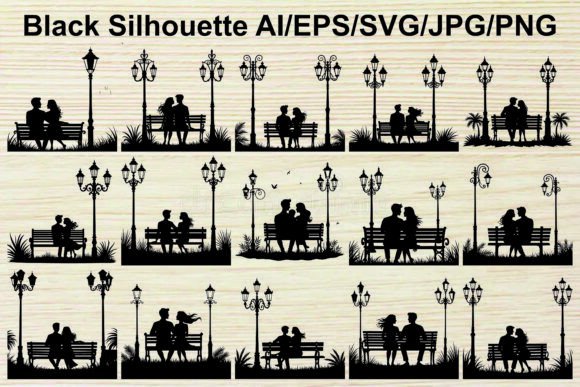
Park Bench Couple Silhouettes Collection: A Practical Guide for Designers and Creators
Visual storytelling often relies on subtle cues rather than explicit details. This is where the Park Bench Couple Silhouettes Collection becomes an invaluable asset for designers, marketers, and content creators. These graphics capture the essence of romance, togetherness, and urban tranquility without the distraction of facial features or complex color palettes. Whether you are designing a wedding invitation, a dating app interface, or a lifestyle blog header, these silhouettes offer a versatile foundation. However, simply downloading a vector bundle is not enough. Many creators overlook critical technical and aesthetic considerations that can compromise the final output. Understanding how to properly select, extract, and apply these design elements ensures your projects maintain professional quality and emotional resonance.
Understanding the Versatility of Romantic Silhouette Graphics
The appeal of couple silhouettes on park benches with vintage street lamps lies in their universal recognizability. They evoke a specific mood—romantic, peaceful, and intimate—making them ideal for themes related to love, dating, and evening city life. Because they are typically rendered in black and white, they integrate seamlessly into various design systems. You can overlay them on photographs, use them as icons, or incorporate them into complex illustrations without clashing with existing color schemes.
However, a common misunderstanding is assuming all silhouette bundles are created equal. The Park Bench Couple Silhouettes Collection distinguishes itself by offering multiple formats, but this variety requires careful handling. Users often grab the first file they see, ignoring the specific needs of their project. For instance, using a low-resolution JPG for a large-format print will result in pixelation, while using an SVG for a simple social media post might be overkill if not optimized. Recognizing the strengths of each file type is the first step toward effective usage.
Common Mistakes in File Management and Extraction
One of the most frequent errors occurs before the design process even begins: improper file extraction. The bundle typically arrives as a single compressed ZIP file containing five distinct format types: JPG, PNG, AI, EPS, and SVG. Many beginners attempt to use files directly from the compressed folder or double-click to preview them without extracting the contents fully. This can lead to corrupted data, missing links in vector software, or inability to edit layers.
The Correct Approach: Always extract the ZIP file completely before opening any assets. Use reliable tools like WinZip, WinRAR, or the built-in extraction features of your operating system. Create a dedicated folder for the project and organize the files by type. This simple habit prevents frustration later when you need to switch between a raster image for web use and a vector file for scaling.
Overlooking Vector Scalability
Another significant oversight is failing to utilize the vector formats (AI, EPS, SVG) for scalable designs. Beginners often default to PNG or JPG because they are easier to view immediately. While these raster formats are suitable for fixed-size digital displays, they lack the infinite scalability of vectors. If you plan to use the silhouette on a billboard, a large banner, or a high-resolution print, raster images will blur or pixelate when enlarged.
By contrast, vector files allow you to resize the romantic couple, park bench, and ornate lamp elements to any dimension without losing clarity. This is crucial for maintaining a crisp, professional appearance across different media. Always start your design process with the AI or EPS file if you are using Adobe Illustrator, or the SVG if you are working in web-based design tools. Reserve the JPG and PNG files for final exports or quick previews.
Aesthetic Considerations and Contextual Fit
Beyond technical specifications, creators often misjudge the contextual fit of the silhouette. The Park Bench Couple Silhouettes Collection features specific elements: vintage street lamps, palm trees, grass, and cityscapes. These details create a distinct atmosphere. A common mistake is forcing these elements into a design where they do not belong aesthetically. For example, using a silhouette with a palm tree in a campaign set in a snowy, northern urban environment creates a cognitive dissonance that distracts the viewer.
Better Practice: Carefully examine the background elements in each silhouette. Does the scene include a dense cityscape, open grass, or specific tree types? Ensure these details align with your narrative. If your project focuses on a generic romantic theme, choose the silhouette with the most neutral background. If you are highlighting a specific location, match the foliage and architectural style of the street lamp to that setting. This attention to detail enhances the authenticity of your design.
Licensing and Usage Rights: What to Check
While many bundles offer broad usage rights, assuming unlimited freedom can lead to legal issues. The description states that you can use these designs for any purpose, but it is wise to verify the specific license terms included in the download. Some licenses may restrict usage in trademarked logos or require attribution for certain commercial applications.
Before integrating the romantic illustration into a client’s brand identity or a product for resale, read the license agreement thoroughly. Look for clauses regarding:
- Commercial Use: Confirm that you can use the graphics in products you sell.
- Modification Rights: Ensure you are allowed to alter the silhouette, such as changing the shape of the bench or removing the street lamp.
- Attribution Requirements: Check if credit is needed, especially for web-based projects.
Ignoring these details can result in takedown notices or legal disputes, which are costly and time-consuming. Taking five minutes to read the license saves hours of potential trouble.
Optimizing for Digital and Print Media
Finally, consider the medium when selecting your file format. For web design, SVGs are ideal because they are lightweight and scale perfectly on responsive sites. They also allow for CSS styling, meaning you can change the color of the silhouette dynamically without creating new image files. For social media posts, high-quality PNGs with transparent backgrounds are preferred to ensure the silhouette blends smoothly with your background image or color.
For print materials, such as brochures or posters, always use the EPS or AI files. These formats preserve the vector paths, ensuring sharp edges and clean lines regardless of the print size. Avoid using JPGs for print unless absolutely necessary, as compression artifacts can degrade the quality of the black-and-white contrast, making the silhouette look muddy or uneven.
In conclusion, the Park Bench Couple Silhouettes Collection is a powerful resource for evoking romance and connection in visual design. By avoiding common pitfalls in file management, format selection, and contextual application, you can maximize the value of these assets. Treat each file type with respect for its intended purpose, verify your usage rights, and align the aesthetic details with your project’s narrative. This disciplined approach ensures that your designs remain professional, impactful, and technically sound.