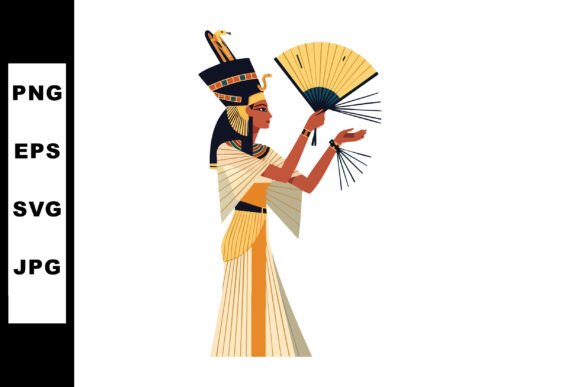
Ancient Egyptian Queen Holding Fan in Tr: A Guide to Quality and Usage
The visual allure of ancient history often serves as a powerful anchor for modern design projects. When you encounter an Ancient Egyptian Queen Holding Fan in Tr, you are looking at more than just a static image; you are engaging with a symbol of royalty, grace, and historical elegance. This specific illustration captures a queen in traditional royal attire, holding a fan adorned with intricate decorative elements. The mood is calm, the style is historically grounded, and the potential applications are vast. However, integrating such assets into professional workflows requires more than a simple download. Many creators overlook the technical nuances that differentiate a usable asset from a frustrating bottleneck.
Understanding the value of this illustration begins with recognizing its versatility. Whether you are a marketer designing a luxury brand campaign, an educator creating historical materials, or a hobbyist working on a personal art project, the quality of your source file dictates the quality of your final output. The downloadable ZIP package for this asset typically includes SVG, EPS, JPG, and PNG files. Each format serves a distinct purpose, and choosing the wrong one can compromise resolution, editability, or compatibility. Let us explore how to navigate these choices effectively, avoiding common pitfalls that often plague digital asset management.
Understanding the Asset and Its Appeal
The Ancient Egyptian Queen Holding Fan in Tr is designed to evoke a sense of timeless authority and serenity. The traditional royal attire, often featuring detailed headdresses and jewelry, combined with the ceremonial fan, creates a composition that is both balanced and striking. This makes it an ideal candidate for projects requiring a touch of sophistication. Designers frequently use such imagery for book covers, website headers, packaging designs, and educational presentations. The calm mood of the illustration allows it to sit comfortably alongside text without overwhelming the viewer, a crucial consideration for layout design.
However, the aesthetic appeal is only half the equation. The technical delivery of the file is equally important. A beautiful image that pixelates when scaled or refuses to open in your preferred software is useless. This is why the inclusion of multiple file formats in the ZIP archive is not just a bonus—it is a necessity for professional use. Understanding why these formats matter will save you time and prevent costly redesigns later in your workflow.
Common Mistakes in File Selection and Usage
One of the most frequent errors creators make is assuming that all image files are interchangeable. This misconception leads to several practical issues. For instance, using a JPG file for a large-format print can result in visible compression artifacts and loss of sharpness. Similarly, attempting to edit a PNG file as if it were a vector graphic will lead to frustration, as raster images cannot be scaled infinitely without quality degradation.
Another common oversight is ignoring the color profile of the downloaded files. Digital screens display colors in RGB (Red, Green, Blue), while printers use CMYK (Cyan, Magenta, Yellow, Key/Black). If you download the Ancient Egyptian Queen Holding Fan in Tr and immediately send the JPG to a printer without checking the color space, the resulting colors may appear dull or shifted. This is particularly problematic with historical illustrations where specific golds, blues, and earth tones are critical to the authentic feel.
Furthermore, many users overlook the licensing terms associated with downloadable assets. While this guide focuses on technical usage, it is vital to remember that purchasing or downloading a file does not always grant unlimited commercial rights. Failing to verify usage rights can lead to legal complications, especially for entrepreneurs and small business owners who may use the image in advertising or product packaging.
The Impact of Poor File Management
When you choose the wrong file format or neglect proper preparation, the consequences ripple through your project. Using a low-resolution PNG for a billboard advertisement, for example, results in a blurry, unprofessional appearance that damages brand credibility. On the other hand, using a complex SVG file for a simple social media post might increase loading times unnecessarily, affecting user experience on digital platforms.
Inefficiency is another significant cost. Spending hours trying to convert a raster image into a vector format because you did not initially download the EPS or SVG file is a waste of valuable resources. Professional designers know that starting with the right tool for the job streamlines the entire creative process. By selecting the appropriate file from the start, you maintain efficiency and ensure high-quality results.
Practical Advice for Optimal Results
To avoid these pitfalls, adopt a strategic approach to downloading and using your assets. Here are some practical steps to ensure you get the most out of the Ancient Egyptian Queen Holding Fan in Tr illustration:
- Match the Format to the Medium: Use SVG or EPS files for print materials, logos, and designs that require scaling. These vector formats maintain crisp edges at any size. Reserve JPG and PNG files for web use, social media, or projects where editing is not required.
- Check Resolution and DPI: For print projects, ensure your raster files (JPG/PNG) are at least 300 DPI (dots per inch). For web use, 72 DPI is standard, but consider higher resolutions for retina displays.
- Verify Color Profiles: Before sending files to print, convert them to CMYK if necessary. Use design software to check and adjust colors to ensure they match your vision.
- Organize Your Files: Upon downloading the ZIP file, extract all contents and organize them into folders labeled by format. This prevents confusion and speeds up your workflow when you need to access a specific version.
- Read the License: Always review the license agreement included in the download. Understand whether the asset is for personal use, commercial use, or requires attribution.
Evaluating Quality Before Commitment
Before you integrate the Ancient Egyptian Queen Holding Fan in Tr into your final design, take a moment to evaluate its quality. Open the SVG or EPS file in a vector editor like Adobe Illustrator or Inkscape. Check if the paths are clean and if the layers are organized. A well-constructed vector file allows you to easily change colors, isolate elements, or adjust details. If the file is messy or difficult to edit, it may not be worth the effort, regardless of its visual appeal.
For raster files, zoom in to 100% or higher. Look for pixelation, noise, or compression artifacts. High-quality JPGs should appear smooth and detailed even at close range. If the image looks grainy or blurred, it may not be suitable for high-visibility projects. Remember, the initial quality of the asset sets the ceiling for your final output. You cannot improve resolution that was never there to begin with.
Making the Right Choice for Your Project
Ultimately, the value of the Ancient Egyptian Queen Holding Fan in Tr lies in how well it serves your specific needs. By understanding the differences between file formats, respecting technical requirements, and planning your workflow, you can avoid common mistakes and achieve professional results. Whether you are a beginner learning the ropes or a seasoned professional refining your process, taking the time to choose and use your assets wisely pays dividends in quality and efficiency.
Embrace the elegance of this historical illustration, but do so with informed precision. Let the calm mood and royal attire enhance your narrative, supported by the technical robustness of properly selected and managed digital files. This balanced approach ensures that your creative vision is realized without unnecessary hurdles, allowing you to focus on what matters most: creating compelling, high-quality content.